Runtime architecture
The runtime uses fixed layers so public capabilities stay testable.
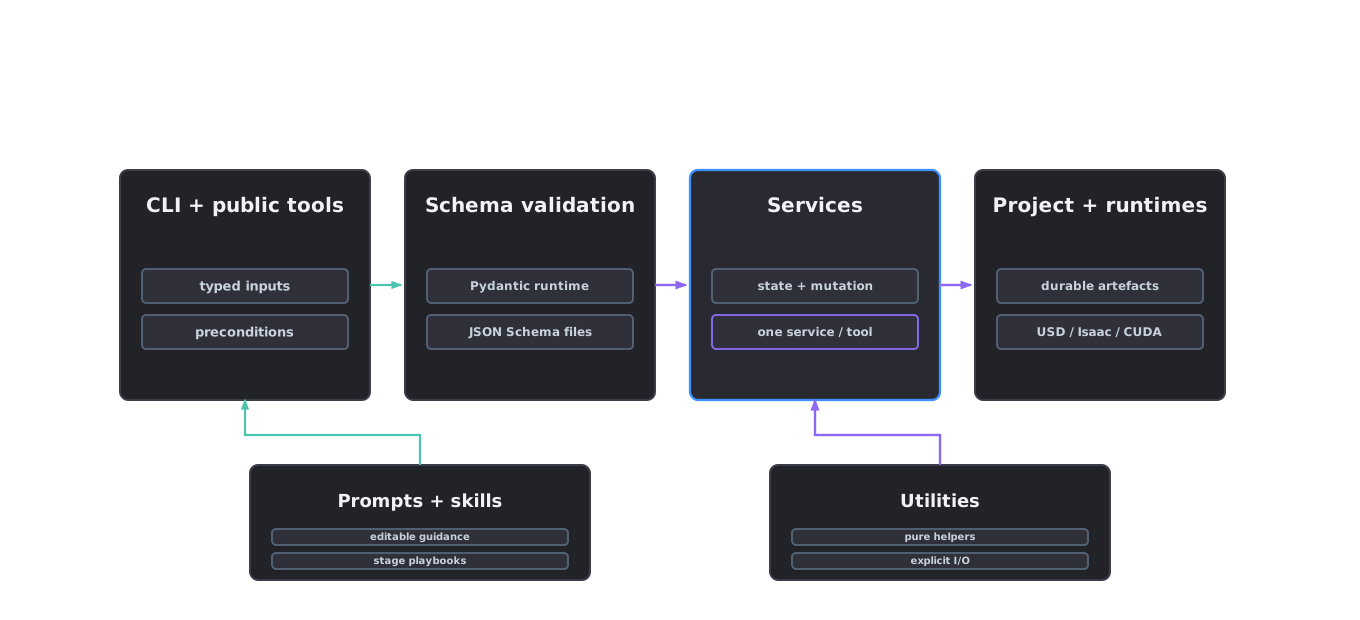
Layer boundary
Asset factory work spans schemas, commands, provider calls, file mutation and heavy runtime integrations. Fixed layers keep those concerns out of unrelated surfaces. Schemas remain validatable without simulator imports, public tools can be tested independently of file-writing details and services retain mutation authority through explicit contracts.
Layers
schemas/: Pydantic data contracts and enums only.tools/: public tool definitions, preconditions and one service call.services/: state-aware orchestration and project mutation. Stage services aresegmentation.py,material_inference.py,texturing.py,live_textures.py,physics_articulation.py,nonvisual_materials.py,simready.pyandasset_authoring.py, withsource.py,project.py,layout.py,external_models.pyandgovernance.pycovering the pre-pipeline and cross-cutting concerns.utils/: pure functions with explicit inputs and outputs.prompts/: editable markdown help for tool domains.skills/: public skill SDK and registry.
The runtime package contains no UI code. The CLI is the only operating surface.
Invariants
- Each public tool has a same-named service function.
- Each public tool has a prompt mention.
- Public tool names encode layer authority.
- Heavy USD, Isaac or CUDA imports stay in services or utilities.
- Schemas and prompts do not import runtime SDKs.
Checks
Test suites and the reproducibility benchmark live in this repository under tests/ and benchmarks/, and .github/workflows/ci.yml runs them together with the tool-service, diagram and workflow checks.