Agent system
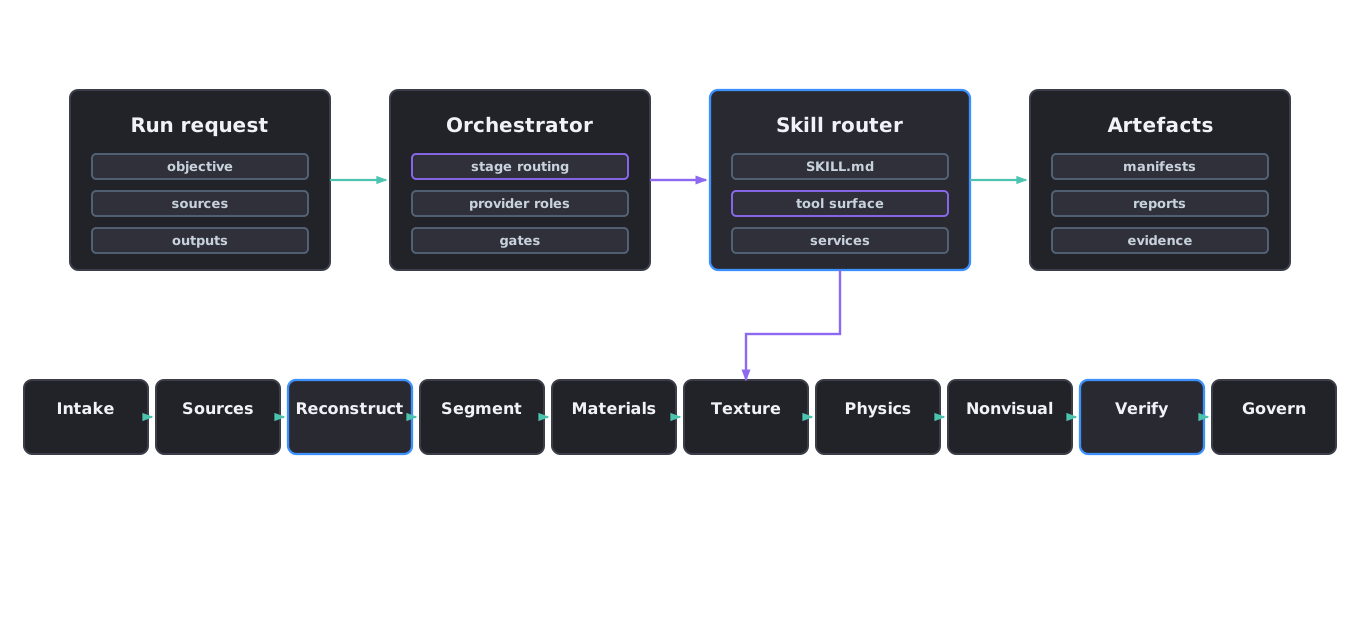
Stage skills run through the public runtime SDK. Registry discovery and the tool router connect them to the runtime.
Mutation boundary
Stage-specific logic sits behind one mutation boundary. Skills propose work through a shared SkillContext; services own durable writes, validation and policy enforcement.
Runtime contract
- Skills use the public Skill SDK.
SkillContextis the route to project state, manifests, evidence, reports, cache paths, provider resolution and dry-run state.- Public tools call service functions.
- Skills cannot patch the core dispatcher.
- Provider output remains proposal material until gates promote it.
Execution flow
- The run request enters the orchestrator.
- The stage router selects the required skill.
- The skill receives scoped context and returns a
ToolResult. - Services write proposals, reports and manifests.
- Validators decide pass, blocked or review-required state.
- Review and governance records decide promotion.
Stage skills
The registry holds 19 packages, including the dedicated mesh-verification-agent between reconstruction-lead and every downstream geometry consumer. The verifier owns deterministic mesh diagnostics, diagnostic renders, vision review, retry accounting and checksum-bound canonical promotion. The stage-invoker package serves direct partial invocation: running one stage on its own with full review guarantees.
Files
configs/skill-registry.jsonconfigs/agent-workflow.jsonsrc/asset_factory_blueprint/skills/skills/<stage>/SKILL.mdskills/<stage>/references/