Material and physical inference
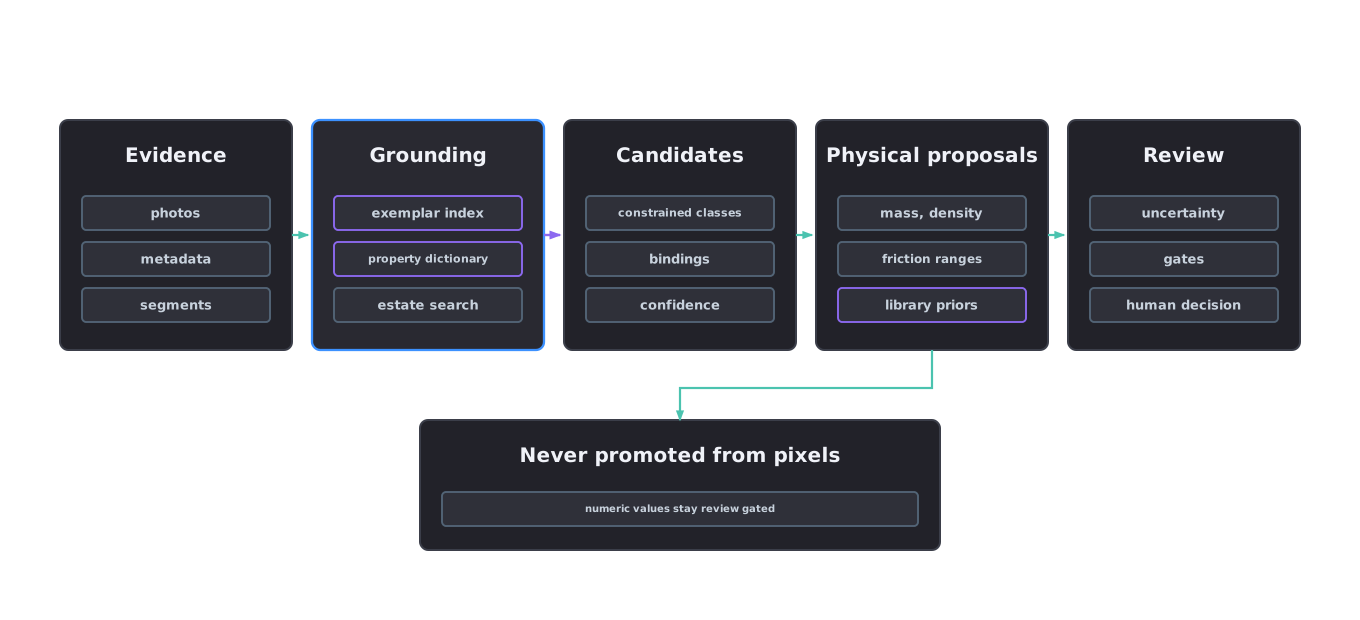
Material inference selects constrained material-library candidates for each segmented component and proposes the physical properties that follow from them. Both are evidence-bound proposals until review promotes them.
Visual and physical consistency
Visual detail affects robotic-policy observations. Policies often learn from colour, edge wear, gloss, seams, dirt, shadows and material contrast. Those cues must agree with the claimed physical properties: an object that looks like rubber but weighs like steel produces bad training signal.
Every selected material and physical property proposal carries evidence. Pixels can support a proposal; numeric physical values require evidence beyond pixels for promotion.
Invoke material inference
Agent skill: material-inference-lead. Tools: material_propose and material_physical_properties_propose. The orchestrator runs this stage once source, geometry and segmentation records exist.
Review the following:
- the material name is constrained to the approved library
- every selected material has evidence and a confidence record
- physical property proposals carry units, uncertainty and review state
Material process
- Read source metadata, CAD material names, BOM entries, specifications, renders, reference images and operator notes.
- Read the segmentation manifest for component regions and material hints.
- Propose candidate materials from the approved material library.
- Record evidence IDs, confidence and uncertainty for each component.
- Select a material or mark the component review-required.
Each component records prim path, label, segment id, candidate materials, selected material, evidence IDs, confidence, uncertainty reason and review status.
Physical property proposals
Material classes imply physical behaviour: mass, density, friction and stiffness. This stage records those implications as physical_property_proposals in the material-inference manifest, each with:
- property name and group
- value, unit, range and distribution
- method and confidence
- evidence IDs
- validation status and notes
Values enter as review_required or needs_measurement and stay there until measured, specified or reviewer-approved. Stage 5 physics-articulation consumes only validated or review-approved proposals.
Manifest
manifests/material-inference-manifest.json records the material library id, component_materials, physical_property_proposals and the binding target layer (mtl.usda).
Material representations
The generated package separates a renderer-neutral sidecar from the operative USD material:
materials.mtlxis a MaterialX 1.39 sidecar using Standard Surface, explicit texture colour spaces and package-relative filenames (Smythe and Stone, 2025)1mtl.usdais the canonical operativeUsdPreviewSurfacematerial and USD binding layer for the universal render context (Alliance for OpenUSD, no date b)2material-adapters.jsonbinds both files by digest and explicitly marks the MaterialX sidecar as unbound until anoutputs:mtlx:surfacenetwork or equivalent source-asset adapter has been authored and validated- MDL remains blocked until its adapter is configured
- Storm and RTX remain pending until runtime render evidence is attached; authoring the files does not imply renderer parity
The USD mtlx adapter gate records an explicitly unbound MaterialX sidecar as not applicable. This status is distinct from a pass. Claiming an authored MaterialX render-context adapter makes the gate applicable; the bound artefact and digest must then validate (Alliance for OpenUSD, no date a)3. The universal Preview Surface gate remains independent.
The package-closure validator traverses USD dependencies and MaterialX filename inputs. Missing, external or escaping texture paths block promotion.
Gates
- material library exists
- material names are constrained
- every selected material has evidence
- physical property proposals carry units, uncertainty and evidence
- numeric values are never promoted from visual evidence alone
References
-
Smythe, D. and Stone, J. (2025) MaterialX: An open standard for network-based CG object looks. Available at: https://materialx.org/Specification.html (Accessed: August 27, 2026). ↩
-
Alliance for OpenUSD (no date b) UsdPreviewSurface specification. Available at: https://openusd.org/release/spec_usdpreviewsurface.html (Accessed: August 27, 2026). ↩
-
Alliance for OpenUSD (no date a) UsdMtlx: MaterialX file format and shader plugins. Available at: https://openusd.org/release/api/usd_mtlx_page_front.html (Accessed: July 9, 2026). ↩